Acne scars can stick around much longer than your pimples did. They can make your skin appear textured, pitted, or tinged with lingering discoloration, marring your appearance and requiring patience to improve. Microneedling is a treatment a dermatologist can perform to treat some types of acne scars by stimulating your skin's natural renewal and collagen production.
Curious about what the treatment involves, which scars it's able to treat, and the healing process? If you've been wondering "microneedling treatment near me," here's some info: ultimately, whether it's right for you is based on what type of scarring you have, your skin condition, and a dermatologist's assessment. If you are considering microneedling treatment in Delhi, understanding the procedure and its suitability can help you make an informed decision.
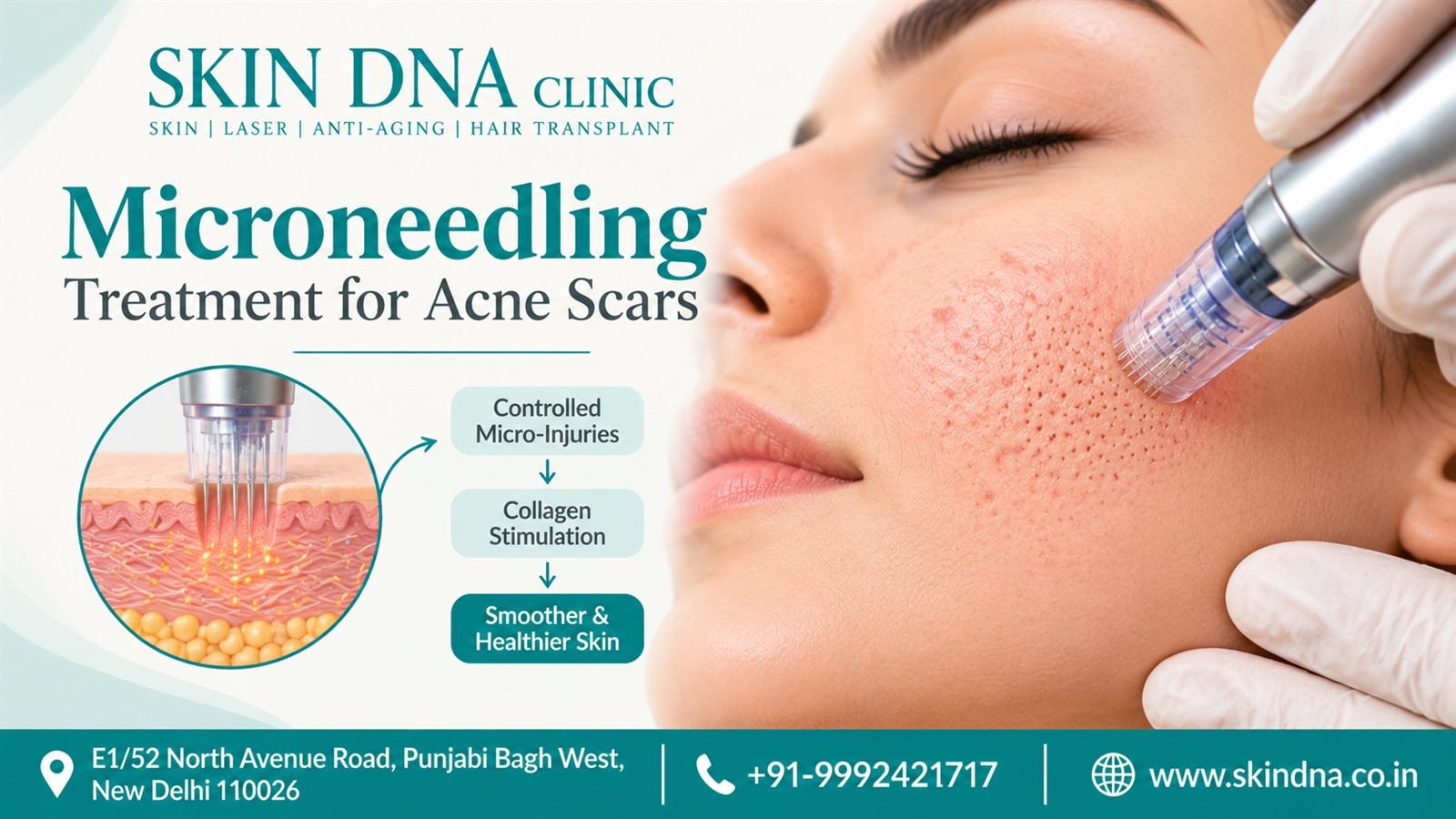
The microneedling procedure is a minimally invasive procedure. A device equipped with small, sterile, precision needles forms superficial punctures in the skin, encouraging the body's natural healing response to a wound which then stimulates collagen and elastin.
Collagen gives our skin its support so that it doesn't sag and drop. Depending on the depth and type of acne scars, microneedling can also be used to treat some depression in the skin by stimulating collagen production, over time creating a more uniform surface.
As the tiny needles induce those minor tiny cuts in the skin, the skin starts to heal. This takes place in stages, first the inflammation, then the tissue healing, and then the remodelling. During this process, new collagen will be generated and can soften some of the depressed scars.
Have realistic expectations. Don't expect your scar tissue to disappear overnight. Improvements usually happen over time as the skin heals and remodels during the weeks or months following the procedure. The improvement you experience depends on your individual scar and your skin, the types of scars, and the treatment plan your dermatologist suggests.
Not all acne scars are created equal. It is important to first identify which type of acne scars you are struggling with.
Rolling scars produce a surface that's irregular and bumpy as fibrous bands pull the surface down. Microneedling can improve the texture of the skin around the rolling scars, but some rolling scars will require another procedure to free those bands.
Boxcar: Wide scars with sharp, well defined edges. Shallower boxcar scars often can be effectively treated with collagen stimulation therapy, while those that are deeper are better treated with a combination of therapies.
Atrophic scars occur when collagen is lost in the process of healing acne lesions, which results in a dimpled appearance of the skin. Microneedling may show benefit in some atrophic scars by assisting in collagen remodelling.
Vertical ice-pick scars may not be responsive to traditional microneedling and could require different treatments.
Your first visit typically will start with an examination of your skin and a discussion about your scar management expectations. The area to be treated will be cleaned, and a numbing topical solution may be used if necessary.
A trained technician will then apply a specialised microneedling treatment over the targeted areas. The depth of the needling as well as the technique used is tailored to the areas being treated and your skin's condition. Mild redness or sensitivity and pinpoint bleeding may appear immediately after treatment.
The dermatologist will then provide aftercare advice specific to the individual condition of your skin. If you are searching for a microneedling clinic in your area ensure it is maintained under clinical guidelines, and each of its tools is sterile.
Whether it's traditional microneedling or microneedling radiofrequency (MNRF), both applications rely on fine needles. However, they are different processes.
Traditional microneedling involves the creation of controlled tiny injuries which stimulate the skin to heal itself. MNRF uses the process of inserting fine needles into the skin together with radio frequency energy into the deep layers of the skin which provides a thermal effect to further assist in collagen remodelling.
The choice between these two treatments is based on your individual scarring, your skin, your expectations and the opinions of your dermatologist. If you want to find out more about the radiofrequency-based option, you can click on this link to our MNRF treatment.
How many sessions you need varies according to the severity and type of your scars, how your skin reacts, and the outcome you desire. Multiple sessions may be recommended, spaced appropriately so the skin can heal between treatments.
Progress generally occurs over a period of time rather than immediately following a single treatment. Your doctor will be able to monitor your progress and advise if more treatments or a different approach is needed. At Skin DNA Clinic, you will have the opportunity to discuss your concerns and potential treatments during your consultation with a dermatologist.
Redness, gentle swelling, tenderness and a feeling of warmth are common after the procedure. This often settles as the skin heals, but depends on the nature of the treatment and the individual.
Keep the skin clean and follow your provider's instructions for recovery. Contact your provider if you have an unusual pain, redness or swelling that gets worse, or any signs of infection.
Microneedling can be an effective option for some people with specific atrophic scars, but this treatment may not be suitable for everyone. Your skin should be examined first. Open wounds and skin infections, as well as certain skin conditions, can influence suitability.
It is a must to consult with an experienced dermatologist before proceeding. To find a microneedling treatment doctor in Delhi, you should take note of the doctor's experience in assessing acne scars and how aware they are of various treatment methods. Dr. Mayuri Jain can evaluate your unique skin issues and discuss which dermatological techniques will work for you.
Choosing the right clinic is an important part of considering microneedling treatment for acne scars in Delhi. At Skin DNA Clinic, Dr. Mayuri Jain focuses on understanding individual skin concerns and assessing acne scar types before discussing suitable treatment options. An individual skin assessment helps determine whether conventional microneedling or another dermatological procedure may be more appropriate. The consultation also provides an opportunity to understand the procedure, expected improvements and aftercare requirements.
Keep an eye on the venue of microneedling in Punjabi Bagh, the way the consultation is carried out, and the presence of a dermatologist during the treatment. These factors will help you make an informed choice. Skin DNA Clinic in Punjabi Bagh, New Delhi is where you go for any skin problem to be taken care of professionally.
People often look for cheap skin specialist in Delhi for treatment but when it comes to skin you have to be really careful and avoid being influenced by advertisements. The following qualities should be present in your skin specialist.
It may improve the appearance of certain depressed acne scars by encouraging collagen production. How much improvement you see depends on the scar type, its depth and how your skin responds.
A topical numbing agent is often used to ease discomfort. Some people feel mild sensations during the procedure, followed by temporary redness or sensitivity.
Changes usually appear gradually as the skin heals and remodels. The timeline varies depending on the scars, the number of sessions and your individual response.
No. Conventional microneedling creates controlled punctures with needles, while MNRF combines microneedling with radiofrequency energy. The two procedures have different considerations.
Deep acne scars may not respond well to conventional microneedling alone. A dermatologist can assess the scar type and advise whether another procedure or a combination of treatments would be more suitable.
Medical Disclaimer
This article is for general educational purposes only. Treatment suitability, possible risks and expected outcomes should be discussed with a qualified dermatologist after an individual skin assessment.

Schedule a consultation to discuss your personalized treatment plan