
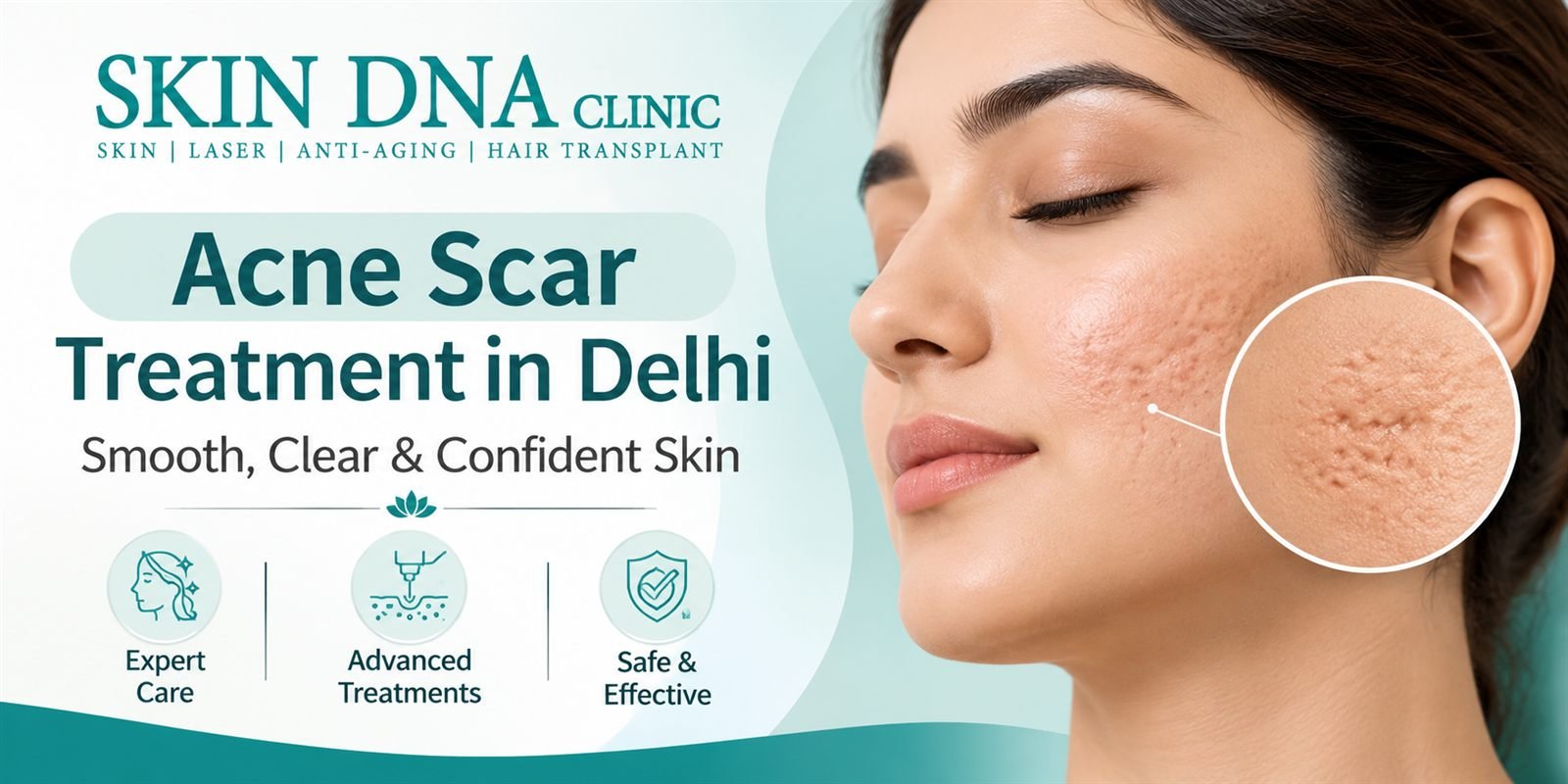
If you are looking for acne scar treatment in Delhi, it is important to understand the type of scarring and the available treatment options. Sometimes acne can cause scarring and textural changes. Whilst some acne-related textural changes will fade over time, deeper scarring can leave permanent textural changes. These include indentations, textural irregularity and raised areas.
To choose the best acne scar treatment for you in Delhi, it's important to understand the type of scarring, its depth, and your skin condition. Consulting an experienced acne scar treatment doctor in Delhi can help determine which treatments are suitable for your skin. Some types of scars may respond better to specific treatments, while a combination of treatments may provide better results.
Here we look at the common types of acne scarring and what to look out for.
Acne scars are textural changes in the skin that can happen if there is any damage to deeper skin layers due to inflammation. When your skin heals it will produce collagen to help repair the damage. If there is not enough or too much collagen this can cause textural changes.
Scarring can be caused by:
Most textural changes, such as brown/red/dark spots are not scarring and are more likely to be pigmentation or redness. Real scarring will cause textural change.
For more information see our prevention guide and tips from your dermatologist.
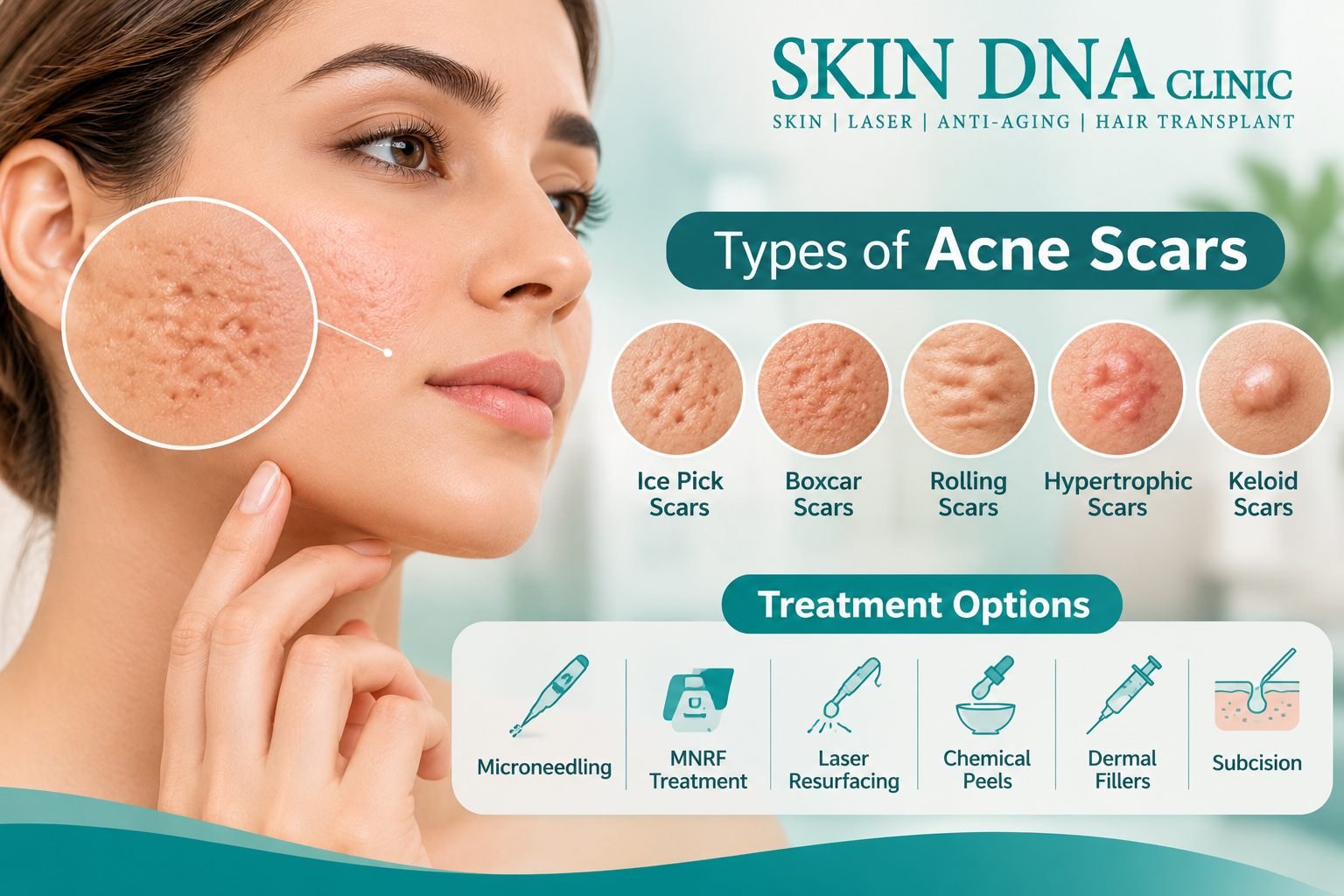
Overall there are two main types of acne scarring. Atrophic scarring causing indentations and raised scarring.
These are very narrow and deep indentations. They appear like tiny holes in the skin and can go quite deep. They are commonly found on the cheeks.
Due to the narrow and deep nature, they can be more difficult to treat.
These are wide indentations with well defined borders. They can be shallow or deep and are often found on the cheeks and temples.
Due to the depth this helps determine what treatment options can be considered.
These cause a wavy appearance to the skin. They happen when fibrous bands form underneath the skin pulling the skin down.
Sometimes subcision can be considered.
Raised scars caused by excessive collagen being formed when healing. They tend to stay within the original acne.
Raised scars that go beyond the original area of damage. They can continue to grow and sometimes cause itchiness and discomfort.
A dermatologist will be able to identify which type of raised scarring you have and recommend the best way to manage.
Your dermatologist will be able to identify what type of scarring you have by looking at:
Some people will have multiple types of acne scarring. A clinical assessment can help to differentiate between the types and true textural changes rather than pigmentation or redness.
The treatment of acne scarring will depend on the type of scarring, depth, skin type, medical history and personal expectations. Your dermatologist may recommend one treatment or a combination.
Subcision is a minimally invasive treatment where a specialised needle or tool is used to release fibrous bands underneath the skin. These bands can cause the skin to pull down creating indentations.
Sometimes subcision can be considered for specific rolling scars and tethered indentations. Sometimes it can be combined with other treatments.
Microneedling involves using fine needles to create micro injuries with the skin. This will cause the skin to heal naturally and produce collagen.
It can be considered for certain atrophic acne scarring and textural issues. The depth of the needles can vary depending on your skin type and the settings used. The amount of sessions will depend on your skin type.
MNRF treatment involves using fine needles and radio frequency to stimulate collagen remodelling. This can help to improve the appearance of specific scarring.
Laser resurfacing uses controlled laser to penetrate specific layers of skin. Depending on the type of laser it can help to improve textural issues and specific atrophic scars.
Your dermatologist will take into account the depth of scarring, skin tone, sensitivity and healing requirements.
Chemical peels use specifically chosen exfoliating solutions to remove specific layers of skin. They can help improve superficial textural issues, uneven skin tone and pigmentation.
They are generally more useful for superficial issues. Deep and tethered scarring may not be as useful. The type and strength of the peel will depend on your skin type.
Certain dermal fillers can be used to temporarily lift specific indentations caused by acne.
They can be considered for specific atrophic scarring. The type of filler, technique and suitability should be discussed with a qualified medical professional.
Laser can be one option to consider to improve skin texture caused by acne. There are different types of lasers available so your dermatologist will consider what type is best for your scarring.
Your dermatologist will consider:
Number of sessions, healing and improvements will depend on the individual. Some people may need a combination of treatments.
Even if two people have similar looking scarring they may need different treatments. This is due to differences in depth, changes in the skin underneath, skin type and healing.
Rolling scars can cause fibrous bands underneath the skin whereas ice pick scars are narrow and deep. Therefore a treatment that would be beneficial for one may not be as helpful for another.
A personalised treatment will take into consideration these differences and may involve more than one treatment. Improvements can take time and it cannot be guaranteed that all scarring will be removed.
Your dermatologist will examine your skin to determine what types of scarring you have. They will also consider the depth and whether there is any active acne or other issues. During your consultation they may ask about previous treatments, medical history, potential side effects and healing.
Dr Mayuri Jain at Skin DNA Clinic will assess your individual skin issues and discuss what treatments would be suitable.
When looking for the best dermatologist in Delhi for acne scar treatment, it is important to find someone with the right qualification, experience and who will assess your skin. They should also be happy to talk through the benefits and limitations of each treatment.
When looking for an acne scars treatment clinic near me it is important to ensure they will properly assess your skin and talk through the available treatment options, limitations and risks.
Skin DNA Clinic can be found at E1/52, North Avenue Road, Punjabi Bagh West, New Delhi 110026. If you're looking for acne scars treatment in Punjabi Bagh you can see a dermatologist to discuss what treatments may be suitable for your skin.
Many acne scars can be improved. However the level of improvement will depend on the type, depth, skin type and how you respond.
It will depend on the type of deep scarring. Subcision and other treatments can be considered for specific cases.
Microneedling can help improve certain atrophic acne scars by stimulating collagen. It will depend on the depth of scarring, skin type and treatment.
There is no set amount of sessions. It will depend on the severity of scarring and treatment chosen.
Yes. Depending on the type of scarring subcision, microneedling, MNRF, chemical peels and specific filler treatments can be considered. Your dermatologist can help to determine what treatments would be suitable.
Acne scarring can present in many ways. Ice pick, boxcar, rolling and raised scarring. Identifying what type of scarring you have is an important step.
Those looking for acne scar treatment in Delhi may have many options to consider. Subcision, microneedling, MNRF, chemical peels, laser and specific injectable treatments. A dermatologist will be able to help identify what treatments may be suitable and how much improvement can be achieved.
Medical Disclaimer
This blog is for educational purposes only and should not be considered a substitute for professional medical advice, diagnosis, or treatment. Consult a qualified dermatologist for personalised assessment and treatment recommendations.

Schedule a consultation to discuss your personalized treatment plan


